

Introduction: The Call to Rise
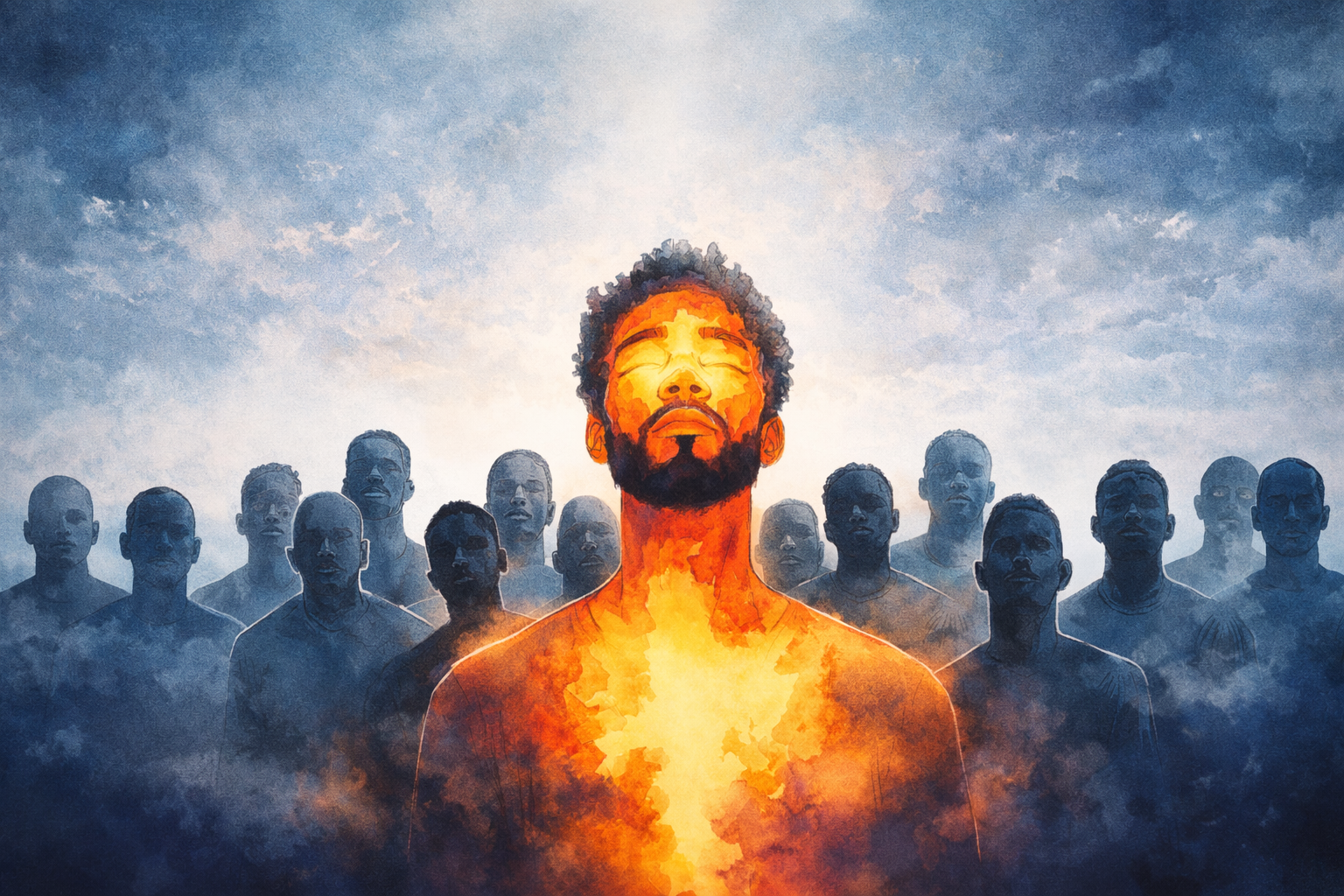
Something is stirring across the earth. Beneath the noise of mainstream Christianity, behind the polished programs and professional pulpits, a cry is rising—a cry from the heart of God for a Church that looks like His Son. Not just a Church that gathers but a Church that governs. Not just a people who attend services, but a people who carry His presence, walk in His authority, and move according to heaven’s design. This is the call to the End-Time Church—a remnant being formed in fire, refined in wilderness, and commissioned with apostolic blueprints straight from the throne of God.
We are no longer in the same era. The shaking has begun. Structures are collapsing. Systems are failing. What can be shaken is being shaken so that what is unshakable may remain. In this divine upheaval, God is not merely refining the Church—He is rebuilding her. The Spirit is calling forth a people who will not settle for the traditions of men or the safe rhythms of religion. He is raising up those who see, who hear, and who build according to His heavenly pattern.
This is not about trends or terminology. This is about divine architecture—the blueprint of Christ being formed in a corporate body. The Church that is rising is not seeker-friendly; she is Spirit-formed. She is not built around personalities; she is built around Presence. She does not conform to culture; she confronts it. She is the Bride, made ready, clothed in righteousness, and aligned with heaven’s government.
This article is a prophetic roadmap—a deep unveiling of the apostolic blueprints God is restoring to the Church in these last days. It’s for those who are hungry for more than Sunday gatherings. For those who hear the sound of eternity and feel the burden of heaven. For those who know in their spirit that the Church must rise—not in name, but in stature, power, and divine alignment.
Let us now explore what exactly the End-Time Church is—according to Scripture and the Spirit.
What Is the End-Time Church?
The End-Time Church is not a future idea—it is a present formation. She is not a new denomination, movement, or trend. She is the Church that reflects the fullness of Christ in a generation that will see His return. The End-Time Church is a remnant—not because she is exclusive, but because she is consecrated. She is not the largest, but she is the purest. She is not the most visible, but she is the most aligned. And she is rising even now.
When we speak of the End-Time Church, we are speaking of a people marked by three primary characteristics: purity, power, and divine pattern. She is holy, not by human striving but by Spirit-wrought fire. She walks in authority, not from position or performance, but by union with the risen Christ. And she builds not by imitation, but by revelation—according to the blueprint in the heavens.
Isaiah saw her when he prophesied, “Now it shall come to pass in the latter days that the mountain of the Lord’s house shall be established on the top of the mountains, and shall be exalted above the hills; and all nations shall flow to it.” (Isaiah 2:2, NKJV). This is a picture of spiritual ascendancy—not through control, but through divine order. The mountain of the Lord’s house speaks of the government of God, the apostolic alignment of His Church in the earth.
The End-Time Church is not defined by size, brand, or influence. She is defined by her proximity to Christ, her obedience to His voice, and her reflection of His nature. She is a Church that discerns the times, knows what to do, and stands as a prophetic witness in the midst of darkness. She is apostolic, prophetic, holy, governmental, and bridal.
To understand how she will rise, we must first understand what must be left behind.
The Old Wineskin vs. the New Wineskin
Jesus warned us of a necessary tension between the old and the new. “No one puts new wine into old wineskins, or else the new wine bursts the wineskins, the wine is spilled, and the wineskins are ruined. But new wine must be put into new wineskins.” (Mark 2:22, NKJV). This wasn’t a metaphor about wine preferences. It was a revelation about structure and capacity. The old wineskin represents systems that were once useful but can no longer contain what heaven is pouring out.
In the last days, God is not simply giving more of the same. He is releasing new wine—fresh outpourings of revelation, glory, and governmental authority. But this wine cannot fit within the structures of religious tradition or man-made ministry models. The End-Time Church must not only receive the wine, she must become a new wineskin—flexible, yielded, aligned with heaven’s design.
The old wineskin is familiar but fruitless. It prizes attendance over transformation, programs over presence, titles over character. It produces believers who are informed but not transformed, busy but not burdened, gathered but not governed.
The new wineskin, by contrast, is apostolic and prophetic in nature. It is relational, not institutional. It equips rather than entertains. It sends rather than gathers for comfort. It is not built around personalities, but around the presence and purpose of Jesus as the Chief Cornerstone.
As we move further into the last days, the pressure between these two wineskins will intensify. Some will resist the new because it exposes the lifelessness of the old. Others will long for the new but be unwilling to abandon the comfort of the familiar. But those who are hungry for more—who recognize that what God is doing cannot be contained in yesterday’s model—will become vessels of reformation.
What does this new wineskin look like practically? To answer that, we must return to the foundation.
The Old Wineskin vs. the New Wineskin
Jesus warned us of a necessary tension between the old and the new. “No one puts new wine into old wineskins, or else the new wine bursts the wineskins, the wine is spilled, and the wineskins are ruined. But new wine must be put into new wineskins.” (Mark 2:22, NKJV). This wasn’t a metaphor about wine preferences. It was a revelation about structure and capacity. The old wineskin represents systems that were once useful but can no longer contain what heaven is pouring out.
In the last days, God is not simply giving more of the same. He is releasing new wine—fresh outpourings of revelation, glory, and governmental authority. But this wine cannot fit within the structures of religious tradition or man-made ministry models. The End-Time Church must not only receive the wine, she must become a new wineskin—flexible, yielded, aligned with heaven’s design.
The old wineskin is familiar but fruitless. It prizes attendance over transformation, programs over presence, titles over character. It produces believers who are informed but not transformed, busy but not burdened, gathered but not governed.
The new wineskin, by contrast, is apostolic and prophetic in nature. It is relational, not institutional. It equips rather than entertains. It sends rather than gathers for comfort. It is not built around personalities, but around the presence and purpose of Jesus as the Chief Cornerstone.
As we move further into the last days, the pressure between these two wineskins will intensify. Some will resist the new because it exposes the lifelessness of the old. Others will long for the new but be unwilling to abandon the comfort of the familiar. But those who are hungry for more—who recognize that what God is doing cannot be contained in yesterday’s model—will become vessels of reformation.
What does this new wineskin look like practically? To answer that, we must return to the foundation.
Jesus as the Wise Master Builder
The rise of the End-Time Church is not a human initiative—it is a divine construction led by Christ Himself. Paul writes, “According to the grace of God which was given to me, as a wise master builder I have laid the foundation…” (1 Corinthians 3:10, NKJV). The Greek word used here for “wise master builder” is architekton—from which we get the word “architect.” Paul wasn’t describing himself as the source of the blueprint—he was describing his obedience to the heavenly design he received from Christ, the true Builder.
Jesus declared, “I will build My church, and the gates of Hades shall not prevail against it.” (Matthew 16:18, NKJV). Notice what He didn’t say—He didn’t say you will build it. He said I will build it. Yet He builds through yielded vessels who know how to labor with Him, not apart from Him. He builds through apostles, prophets, intercessors, worshipers, and reformers—each one aligning their function with heaven’s plan.
When Jesus builds, He builds for eternity, not for crowds. He builds living stones, not brick-and-mortar alone. He doesn’t just fill buildings; He indwells people. He doesn’t just plant churches; He raises sons. He’s not looking for ministries that perform; He’s looking for altars that burn.
The End-Time Church will be distinguished by this truth: she will not be man-built, but Christ-built. She will not be built on charisma, cleverness, or commerce—but on the revelation of Jesus, rightly aligned to the blueprint of the Father.
To walk in this revelation, we must understand the transition we’re living through—a divine shift from Church Age thinking to Kingdom Age reality.
From Church Age to Kingdom Age
We are living in a prophetic transition—what many have called the shift from the Church Age to the Kingdom Age. This doesn’t mean the Church is irrelevant. It means the Church must come into her Kingdom identity. For too long, we have measured success by attendance, buildings, budgets, and branding. But heaven measures by alignment, obedience, authority, and maturity.
The Church Age emphasized gathering, teaching, and salvation. The Kingdom Age emphasizes governance, discipleship, and dominion. The Church Age prioritized going to church. The Kingdom Age demands we be the Church, governing atmospheres, discipling nations, and advancing the King’s domain. In the Church Age, we came to be fed. In the Kingdom Age, we come to be sent.
Jesus didn’t just preach salvation—He preached the Gospel of the Kingdom. He said, “This gospel of the kingdom will be preached in all the world as a witness to all the nations, and then the end will come.” (Matthew 24:14, NKJV). That verse alone tells us that the end is not triggered by general evangelism, but by the proclamation and demonstration of the Kingdom—a full gospel that restores authority, holiness, government, and glory.
The End-Time Church will carry this Kingdom mantle. She will disciple cities, not just individuals. She will challenge thrones of darkness. She will confront injustice with divine order. She will train believers to walk in mature sonship, not perpetual infancy.
This transition requires new wineskins, new leadership paradigms, and a return to apostolic fire. The Kingdom Age is not about leaving the Church behind—it’s about bringing the Church into alignment with what she was always meant to be: the embassy of heaven on earth.
Now that we’ve seen the shift, let’s explore why the End-Time Church must be apostolic to function in the Kingdom.
Why the End-Time Church Must Be Apostolic
The word “apostolic” is not a trend—it is a template. It comes from the Greek word apostolos, meaning “one who is sent as an official representative with delegated authority.” When Jesus chose the Twelve, He didn’t just choose followers—He chose apostles. He wasn’t planting a fan club. He was laying the foundation for a government.
The End-Time Church must be apostolic because the times demand divine order, strategic governance, and mature representation of Christ on the earth. The chaos in culture, the upheaval in nations, and the war in the spirit realm cannot be answered by a passive Church. It must be answered by a people who are aligned, authorized, and sent—apostolic in nature and function.
In Luke 6:13, Jesus called His disciples to Himself, and “from them He chose twelve whom He also named apostles.” He was establishing His government on the earth, modeling after the twelve tribes of Israel, and pointing forward to the twelve foundations of the New Jerusalem (Revelation 21:14). This was no accident. It was architectural. Governmental. Eternal.
To be apostolic is not merely to have an apostle on staff. It is to operate with apostolic DNA—a culture of sending, discipling, building, aligning, and stewarding heaven’s blueprint. Apostolic churches raise up leaders, establish order, deal with spiritual warfare, and labor to see Christ formed in people—not just entertained on Sunday.
The End-Time Church cannot afford to be led by preference or personality. She must be led by apostolic grace, informed by prophetic insight, and driven by the burden of the Lord. Only then can she stand as a governing witness in the midst of Babylon.
So what does this apostolic architecture look like practically?
Let’s explore the foundational framework next in:
Heaven’s Architecture: Fivefold Foundations
Heaven builds by design, not by default. Ephesians 4:11–13 gives us one of the clearest blueprints for how the Church is to function: “And He Himself gave some to be apostles, some prophets, some evangelists, and some pastors and teachers, for the equipping of the saints for the work of ministry, for the edifying of the body of Christ…” (NKJV). This is what we call the Fivefold Ministry—a pattern, not a preference.
These five gifts are not hierarchical ranks, but divine functions that represent the full ministry of Christ distributed through His Body. Jesus was all five—apostle, prophet, evangelist, pastor, and teacher. And now, by His Spirit, He distributes those graces among the Body to equip the saints and bring the Church into maturity.
Let’s briefly explore each:
Apostles –
The Builders and Sent Ones
They govern. They are foundational. They bring divine order and strategy, establish churches, set leadership in place, and release Kingdom architecture. Apostles don’t just oversee churches—they steward regions, confront principalities, and carry the grace to realign what’s been broken.
Prophets –
The Eyes and Ears of the Church
They guide. They are the voice of heaven in the earth. Prophets bring correction, direction, and divine insight. They call the Church back to purity and unveil the hidden things of God. Their ministry is not just foretelling but forth-telling—releasing the burden of the Lord.
Evangelists –
The Harvesters
They gather. Evangelists carry the burning heart of the Good Shepherd who leaves the ninety-nine for the one. They stir the Church to reach the lost, heal the sick, and demonstrate the Gospel with power.
Pastors –
The Shepherds
They guard. Pastors nurture, protect, and tend to the flock. Their role is essential in maintaining the emotional and spiritual health of the Body, bringing stability and love to growing believers.
Teachers –
The Establishers
They ground. Teachers lay doctrinal foundation, rightly divide the Word, and establish believers in truth. They inoculate the Church against deception and raise a people who can rightly discern good from evil.
The goal of the fivefold ministry is not to control the saints but to equip them—to raise up a mature, functioning Body who can minister in every sphere of life. This is heaven’s design: a Church equipped, aligned, and activated.
But in this age, the roles of apostles and prophets are especially critical. Let’s now explore the first of these in detail:
The Role of Apostles in the Last Days
In these final hours of human history, the role of the apostle is being restored with urgency and clarity. Not as celebrity leaders, but as wise master builders carrying the burden of heaven for regions, cities, and nations. Their assignment is not merely to plant churches—it is to establish divine government. The Church has long operated under pastoral leadership alone, but this model cannot hold the weight of the glory that is coming. Apostolic grace is required to steward the weight of God’s blueprint.
Apostles in the last days are territorial reformers, sent not only to edify the local church but to confront demonic structures, disciple cities, and raise up mature sons and daughters who reflect Christ. They operate with both revelatory vision and governmental authority. Their call is not for comfort but for alignment. They labor to see Christ formed in people and regions—just as Paul said to the Galatians, “My little children, for whom I labor in birth again until Christ is formed in you…” (Galatians 4:19, NKJV).
These apostles function under the weight of heaven’s plumbline. Like Nehemiah, they rebuild the ruined walls. Like Moses, they ascend the mountain to receive the pattern. Like Paul, they weep for the Church to walk in holiness. Apostles are not merely strategists; they are fathers in the Spirit. They don’t just teach principles—they impart DNA. Their leadership doesn’t come from a boardroom but from the secret place.
And in the last days, God is raising apostolic teams, not just individuals—regional companies of mature builders, evangelists, prophets, and pastors working together under apostolic alignment to establish Kingdom culture.
But apostles do not work alone. They are always paired with prophets. Let’s now examine the essential role of prophets in the rise of the End-Time Church.
The Role of Prophets in the Last Days
If apostles are the architects of God’s house, prophets are the eyes and ears of His Spirit. In the End-Time Church, prophets are not optional—they are essential. Their ministry pierces through deception, dismantles idolatry, and calls the people of God back to intimacy with His voice. In Amos 3:7, Scripture declares, “Surely the Lord God does nothing, unless He reveals His secret to His servants the prophets.” (NKJV). Prophets are the Lord’s confidants—those who stand in the council of the Lord (Jeremiah 23:18) and carry His burden with trembling.
In the last days, deception will increase. False teachers, false prophets, and false gospels will multiply. The only antidote to a counterfeit is a genuine prophetic voice—one that has not bowed to Baal, one that carries the fire of holiness and the authority of heaven. True prophets will expose mixture and call the Church back to the altar. They are not entertainers. They are threshing instruments in the hand of God.
The role of prophets includes:
- Discerning the times and seasons (1 Chronicles 12:32)
- Bringing correction with love and boldness
- Releasing strategies and blueprints from the throne
- Calling the Church to repentance and purity
- Preparing the Bride for the return of the Bridegroom
Like Elijah, prophets will challenge Jezebel and false altars. Like Jeremiah, they will weep over cities. Like John the Baptist, they will prepare the way of the Lord. Their words will not flatter—they will cut and heal, root out and plant, just as God said in Jeremiah 1:10.
Prophets are vital in the End-Time Church not because of personal gifting, but because they restore the fear of the Lord, without which no structure will stand.
Now that we understand the dual ministry of apostles and prophets, let’s look at how the End-Time Church will operate in function—not just foundation.
The End-Time Church in Function: Ecclesia, Not Institution
To understand how the End-Time Church is meant to function, we must return to Jesus’ own words: “I will build My church, and the gates of Hades shall not prevail against it.” (Matthew 16:18, NKJV). The word “church” here is ekklesia in Greek. It does not mean a building, a weekend service, or a nonprofit organization. It means a called-out governing assembly—a legislative body with authority to represent the interests of a king in a region.
Jesus didn’t say He would build a temple. He said He would build an ekklesia—a people who govern by the Spirit, legislate through prayer, and enforce the will of heaven on the earth. The End-Time Church must recover this original identity. We are not an audience—we are an army. We are not consumers—we are citizens of heaven, ambassadors of Christ, and co-laborers with the King.
The early Church functioned this way. In Acts 2, they met daily, broke bread, studied the apostles’ doctrine, moved in signs and wonders, shared resources, and walked in holy fear. There were no spectators—only participators. There were no denominations—only devotion. There was no division between clergy and laity. The entire Body functioned under the leadership of the Holy Spirit.
This model is not outdated—it is eternal. And the End-Time Church must return to it—not by copying their methods, but by carrying their DNA. The ekklesia governs through prayer, fasting, intercession, teaching, prophetic decrees, apostolic alignment, and supernatural ministry. It does not conform to culture. It transforms it.
As we move forward in this apostolic blueprint, we must also be sober-minded. The glory of the End-Time Church will be accompanied by great shaking.
Let’s now explore:
The Shaking of the Nations and the Emerging Remnant
Hebrews 12:26–27 gives us a sobering word for the days we’re living in: “Yet once more I shake not only the earth, but also heaven.” This shaking is not accidental—it is intentional. It is divine. God is shaking systems, structures, and institutions that have long resisted His government. He is shaking religious traditions, political thrones, economic strongholds, and even long-standing church models that no longer reflect His heart.
But there’s a purpose to the shaking: “…that the things which cannot be shaken may remain.” In other words, what is not built on Christ—what is not apostolic in structure, prophetic in spirit, and pure in motive—will not stand.
This is where the remnant Church emerges—not the popular Church, not the lukewarm Church, but the purified, consecrated company who have not bowed to Babylon. They are not large in number, but they are mighty in spirit. They do not fear persecution. They fear compromise. They are hidden ones, fiery ones, bridal ones.
This remnant will:
- Discern the times (like the sons of Issachar)
- Carry governmental intercession (like Anna and Simeon)
- Rebuild altars of worship and repentance (like Elijah)
- Reestablish the Word as the standard (like Ezra and Nehemiah)
- Refuse mixture and embrace holiness (like the wise virgins)
God is not interested in a crowd—He is looking for a company, a Gideon army who drinks from the river with eyes alert, a people trained in both the Word and the Spirit, a people who know how to stand on the wall and build at the same time.
And this remnant is being forged in the fires of intimacy, not in the stages of performance. They are being raised in the caves of communion, not the lights of celebrity. And they will carry the blueprint of heaven because they have first carried the burden of the Lord.
Let’s now examine what this apostolic remnant will carry into the nations.
The Apostolic Remnant and Their Global Mandate
The End-Time Church is not called to survive culture. She is called to disciple nations. Matthew 28:19–20 commissions us: “Go therefore and make disciples of all the nations, baptizing them… teaching them to observe all things that I have commanded you…” (NKJV). This is not just evangelism—it is discipleship of systems, spheres, and territories.
The apostolic remnant understands this. They are not content with revivals that fade or conferences that entertain. They carry a global mandate to bring alignment, occupation, and transformation in every mountain of society—government, education, business, media, arts, and beyond.
This mandate includes:
- Reclaiming altars in regions defiled by idolatry
- Raising up Kingdom leaders in every field—not just pulpit preachers but prophetic entrepreneurs, apostolic educators, intercessory politicians, and reformers
- Training and sending teams to disciple and govern through prayer, teaching, deliverance, and prophetic strategies
- Planting apostolic hubs that function as houses of presence, prayer, equipping, and regional impact—not just Sunday services
These hubs will serve as embassies of heaven—places where healing flows, justice is decreed, worship is unending, and strategies are released for cities and nations. They are not built around personalities but around the presence of God and the pattern of heaven.
The apostolic remnant will operate like Josephs and Daniels—embedded in secular systems, carrying divine wisdom. Like Pauls and Timothys—raising up next-generation builders. Like Priscillas and Aquilas—hosting movements from their homes.
And they will not do this by might or power, but by the Spirit of the Lord.
Let’s now look at how this remnant stays rooted, not just sent:
Intimacy and Government: The Priesthood of the Apostolic Church
The apostolic Church does not separate government from intimacy—it flows from it. Before we are builders, we are lovers. Before we legislate, we worship. The End-Time Church will only carry true authority to the degree that she walks in the inner court of communion. For it is from that place—behind the veil, before the mercy seat—that authority is granted.
In Revelation 1:6, we are told that Christ “has made us kings and priests to His God and Father.” The apostolic Church must function in both realms—priestly intimacy and kingly dominion. We are called to stand in two places: before God and before the people. We behold His beauty, and we decree His will.
The priests of old could not minister unless they first washed in the laver and approached the altar. Likewise, apostolic leaders today must be men and women of the secret place. Not just strategy, but stillness. Not just vision, but beholding.
The Levitical priesthood offered daily sacrifices; the Melchizedek priesthood offers eternal intercession. Jesus is our High Priest after the order of Melchizedek (Hebrews 7:17). He now ever lives to make intercession. The apostolic Church joins Him in that place—carrying burdens, releasing decrees, and birthing destinies in prayer.
Without this priesthood, the structure becomes hollow—efficient but powerless. But when government flows from intimacy, the house is filled with glory. In Ezekiel’s vision, the glory returned from the east gate—the place of prayer and rising. Only a priestly people can host sustained outpouring.
So the rise of the End-Time Church is not a rise of programs—it is the rise of a bridal priesthood who ministers before the Lord and releases His government into the earth.
Let’s now bring this journey to its prophetic conclusion in:
Apostolic Blueprints: Building What Heaven Is Saying
The Spirit is not building randomly—He is building according to a pattern. Just as Moses was commanded on Mount Sinai: “See that you make all things according to the pattern shown you on the mountain” (Hebrews 8:5, NKJV), so too must the End-Time Church build according to what is revealed in the high place of communion.
Apostolic blueprints are not formulas—they are living revelation. They are born in the counsel of the Lord, tested in the fire of obedience, and carried in the womb of intercession. These blueprints are not simply for churches, but for cities, nations, and generations. They include:
- Structure for equipping saints in their true callings (not just volunteer slots in a program)
- Regional prayer strategies that displace territorial spirits
- Covenantal relationships that function in team-based leadership, not hierarchy
- Discipleship ecosystems that multiply spiritual maturity, not just attendance
- Marketplace strategies that invade economic systems with righteousness and justice
- Worship infrastructures that release prophetic sound and establish open heavens
- Evangelistic missions not built on hype, but on love, deliverance, and the fear of the Lord
Apostolic blueprints are revealed, not invented. They are architectures of glory, not mechanisms of man. They require humility, holiness, and honor for the presence of God. They are entrusted to those who have died to ambition and embraced the hidden path.
These blueprints often look foolish to the carnal mind, but they are the wisdom of God for this hour. Noah was given a blueprint. Moses was given a tabernacle. David received the temple’s design. Nehemiah received the wall’s assignment. Jesus built with blueprint. Paul planted with revelation.
So must we.
This is the call of the End-Time Church—to return to the ancient paths, walk in the rhythm of heaven, and build what the Father is revealing. Nothing less will carry the weight of the coming glory.
Conclusion: The Church God Is Raising
The Church of the last days will not be defined by buildings, budgets, or branding. She will be known by her intimacy with the Lamb, her alignment with heaven, and her authority in the Spirit. She will not bend to Babylon. She will not conform to culture. She will arise as a bride without spot, a house of prayer for all nations, and a governing body carrying the voice of the Lord.
We are not waiting for the End-Time Church to be built—we are being summoned to build it now. Not by flesh, not by formality, but by the fire of the Holy Spirit and the wisdom of apostolic grace. This is the generation of Nehemiahs and Esthers, of Pauls and Deborahs, of remnant reformers who will rise in power, humility, and holy fire.
- Let the prophets ascend the wall.
- Let the apostles mark the boundaries.
- Let the priests tend the flame.
- Let the Bride make herself ready.
The blueprint is being released. The shaking has begun. The only question is—will you answer the call?
If your heart burns to see Christ formed in His Church… if you sense the Spirit beckoning you deeper into apostolic purpose and prophetic alignment… then let’s walk this journey together.
Contact Us Today and Be Part of What God Is Building
FAQs: Apostolic Blueprints for the End-Time Church
1. What’s the difference between a traditional church and an apostolic hub?
A traditional church often focuses on Sunday gatherings and pastoral care, while an apostolic hub is a governing center that equips believers to impact regions, disciple nations, and operate in fivefold ministry.
2. Do I have to be an apostle or prophet to be part of the End-Time Church?
No. Every believer has a role. The apostolic-prophetic foundation equips all saints to mature in Christ and fulfill their unique Kingdom assignment.
3. Why is God shaking churches and systems right now?
God is purifying His Bride and removing anything that does not align with His nature, Word, and purpose. The shaking is divine preparation for greater glory.
4. Can small churches or home fellowships carry apostolic blueprints?
Absolutely. It’s not about size—it’s about alignment. Many powerful apostolic movements are birthed in hidden, humble places.
5. How can I begin walking in the apostolic blueprint God has for me?
Start with intimacy. Seek the face of the Lord. Be discipled in a healthy apostolic-prophetic environment. Learn the Word deeply. And say yes to the refining and sending process of the Spirit.